Showing posts with label Technology. Show all posts
Showing posts with label Technology. Show all posts
Exclusive: Bill Gates Gives Back
"Nightline's" Bill Weir talks with Microsoft founder about funding charities
Steve Jobs Dies: Apple Chief Made Early Personal Computer, Created iPad, iPod, iPhone

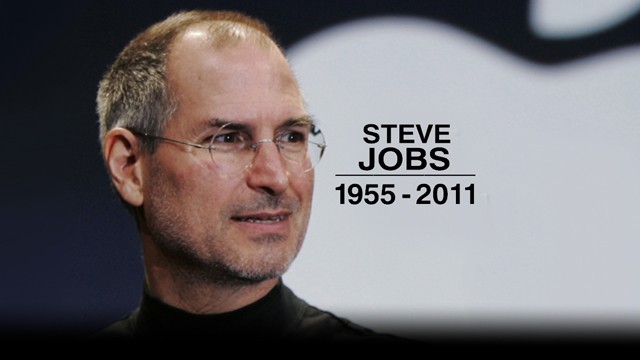
Steve Jobs, the mastermind behind Apple's iPhone, iPad, iPod, iMac and iTunes, has died, Apple said late today. He was 56 years old.
Jobs died peacefully, surrounded by family members, his family said in a statement. In recent years Jobs had fought a form of pancreatic cancer and had a liver transplant.
"Steve's brilliance, passion and energy were the source of countless innovations that enrich and improve all of our lives," read a statement byApple's board of directors. "The world is immeasurably better because of Steve. His greatest love was for his wife, Laurene, and his family. Our hearts go out to them and to all who were touched by his extraordinary gifts."
Jobs co-founded Apple Computer in 1976 and, with his childhood friend Steve Wozniak, marketed what was considered the world's first successful personal computer, the Apple II.
Industry watchers called Jobs a master innovator -- perhaps on a par with Thomas Edison -- changing the worlds of computing, recorded music and communications.
"I'm shocked and disturbed," said Wozniak when reached by ABC News. Later, on ABC News' "Nightline," he said it was hard to imagine, in some ways, how the world would move forward without Jobs.
"You get shocked when people you know die," Wozniak said. "And this was closer to when John Lennon died, or JFK or Martin Luther King."
As Jobs' death was announced, the homepage of Apple's website switched to a full-page image of Jobs with the text, "Steve Jobs 1955-2011."
ABC News/ABC News
Apple founder, Steve Jobs has died.View Full Size
Steve Jobs in 60 Seconds Watch Video
Steve Jobs: 1955-2011 Watch Video
Jobs Tribute: Founder, FriendWatch Video
"Apple has lost a visionary and creative genius, and the world has lost an amazing human being," the text read. "Those of us who have been fortunate enough to know and work with Steve have lost a dear friend and an inspiring mentor. Steve leaves behind a company that only he could have built, and his spirit will forever be the foundation of Apple."Clicking on the image brought one to additional text that was attributed to Apple's current CEO, Tim Cook.
Reaction to Jobs' death came from far and wide.
"Michelle and I are saddened to learn of the passing of Steve Jobs," President Obama said in a written statement. "Steve was among the greatest of American innovators -- brave enough to think differently, bold enough to believe he could change the world, and talented enough to do it."
Jobs' rivals in the development of personal computers, Microsoft co-founders Bill Gates and Paul Allen, immediately reacted to his death and highlighted his importance to their industry.
Allen called him "a unique tech pioneer and auteur who knew how to make amazingly great products."
Gates said, "Steve and I first met nearly 30 years ago, and have been colleagues, competitors and friends over the course of more than half our lives.
"The world rarely sees someone who has had the profound impact Steve has had, the effects of which will be felt for many generations to come," Gates said. "For those of us lucky enough to get to work with him, it's been an insanely great honor. I will miss Steve immensely."
Facebook founder Mark Zuckerberg said, "Steve, thank you for being a mentor and a friend. Thanks for showing that what you build can change the world. I will miss you."
Jobs continued to create in recent years despite his failing health. He took three medical leaves from Apple.
In 2004, he beat back an unusual form of pancreatic cancer, and in 2009 he was forced to get a liver transplant. Jobs finally announced on Aug. 24, 2011 that he was stepping down as Apple's chief executive.
"I have always said if there ever came a day when I could no longer meet my duties and expectations as Apple's CEO, I would be the first to let you know," Jobs wrote in his letter of resignation. "Unfortunately, that day has come."
He remained as chairman of the corporation, a new position created for him.
Steve Jobs Dies: Remembering a Tech Innovator
Jobs' family released a statement tonight thanking everyone who had expressed concern about his health in the final year of his life.
"In his public life, Steve was known as a visionary; in his private life, he cherished his family," the statement said. "We are grateful for the support and kindness of those who share our feelings for Steve. We know many of you will mourn with us, and we ask that you respect our privacy during our time of grief."
One of the world's most famous CEOs, Jobs remained stubbornly private about his personal life, refusing interviews and shielding his wife and their children from public view.
"He's never been a media person," said industry analyst Tim Bajarin, president of Creative Strategies, after Jobs resigned in August. "He's granted interviews in the context of product launches, when it benefits Apple, but you never see him talk about himself."
Apple said it was not planning any public events, though Cook's memo to Apple employees said the company was "planning a celebration of Steve's extraordinary life for Apple employees that will take place soon."
At Apple headquarters in Cupertino, Calif., tonight, people were hugging and crying. Candles were lit around an iPad with a picture of Jobs on the screen, and people quietly stood and looked at the memorial.
Apple fans also gathered at an Apple store in New York City, though a security guard said he was told to pick up any flowers and remove anything like a shrine.
"For all he did -- his inventions, the way he changed technology and communications -- I felt I was obligated, in a way, just to say, "Thank you.'" said David Del Toro, 37, of Miami.

Tony Avelar/AFP/Getty Images
Apple CEO and co-founder Steve Jobs shows off... View Full Size
Steve Jobs in 60 Seconds Watch Video
Steve Jobs: 1955-2011 Watch Video
Jobs Tribute: Founder, FriendWatch Video
In the years that followed, he went into other businesses, founding NeXT computers and, in 1986, buying the computer graphics arm of Lucasfilm, Ltd. -- which became Pixar Animation Studios and transformed the cartoon world with such films as "Toy Story" and "WALL-E."The highlights of Jobs's career trajectory are well-known: a prodigy who dropped out of Reed College in Oregon and, at 21, started Apple with Wozniak in his parents' garage. He was a multimillionaire by 25, appeared on the cover of Time magazine at 26, and was ousted at Apple at age 30, in 1985.
He was described as an exacting and sometimes fearsome leader, ordering up and rejecting multiple versions of new products until the final version was just right. He said the design and aesthetics of a device were as important as the hardware and software inside.
In 1996, Apple, which had struggled without Jobs, brought him back by buying NeXT. He became CEO in 1997 and put the company on a remarkable upward path.
By 2001, the commercial music industry was on its knees because digital recordings, copied and shared online for free, made it unnecessary for millions of people to buy compact discs.
Jobs took advantage with the iPod -- essentially a pocket-sized computer hard drive with elegantly simple controls and a set of white earbuds so that one could listen to the hours of music one saved on it. He set up the iTunes online music store, and persuaded major recording labels to sell songs for 99 cents each. No longer did people have to go out and buy a CD if they liked just one song from it. They bought a digital file and stored it in their iPods.
"Other companies sold digital music before Apple," said Bill Werde, editorial director of Billboard magazine. "Other companies made digital music available on computers and digital phones and used it in commercials. Apple's brilliance -- and I don't think anyone doubts that this was Steve Jobs' brilliance -- was that Apple made it exciting and simple and effortless and fun. Before Steve Jobs, digital music was math class. After, it was recess."
Jobs did not rest. In 2007, he transformed the cellphone. Apple's iPhone, with its iconic touch screen, was a handheld computer, music player, messaging device, digital wallet and -- almost incidentally -- telephone. Major competitors, such as BlackBerry, Nokia and Motorola, struggled after it appeared.
By 2010, Apple's new iPad began to cannibalize its original business, the personal computer. The iPad was a sleek tablet computer with a touch screen and almost no physical buttons. It could be used for almost anything software designers could conceive, from watching movies to taking pictures to leafing through a virtual book.
Steve Jobs' Personal Life
Jobs kept a close cadre of friends, Bajarin said, including John Lasseter of Pixar and Larry Ellison of Oracle, but beyond that, shared very little of his personal life with anyone.
But that personal life -- he was given up at birth for adoption, had an illegitimate child, was romantically linked with movie stars -- was full of intrigue for his fan base and Apple consumers.
Jobs and his wife, Laurene Powell, were married in a small ceremony in Yosemite National Park in 1991, lived in Woodside, Calif., and had three children, Reed, Erin and Eve.
He admitted that when he was 23, he had a child out of wedlock with his high school girlfriend, Chris Ann Brennan. Their daughter, Lisa Brennan Jobs, was born in 1978.
He had a biological sister, Mona Simpson, the author of such well-known books as "Anywhere But Here." But he did not meet Simpson until they were adults and he was seeking out his birth parents. Simpson later wrote a book based on their relationship. Its title: "A Regular Guy."
Fortune magazine reported that Jobs denied for years that he was the father of Lisa Brennan Jobs, at one point swearing in a court document that he was infertile and could not have children. According to the report, Chris Ann Brennan collected welfare for a time to support the child until Jobs later acknowledged Lisa as his daughter.
Steve Jobs in 60 Seconds Watch Video
Steve Jobs: 1955-2011 Watch Video
Jobs Tribute: Founder, FriendWatch Video
At Reed, Jobs became romantically involved with the singer Joan Baez, according to Elizabeth Holmes, a friend and classmate. In "The Second Coming of Steve Jobs," Holmes tells biographer Alan Deutschman that Jobs broke up with his serious girlfriend to "begin an affair with the charismatic singer-activist." Holmes confirmed the details to ABC News.There were other personal details that emerged over the years, as well.
Jobs' Health and Apple's Health
Enigmatic and charismatic, Jobs said little about himself. But then his body began to fail him.
In 2004, he was forced to say publicly he had a rare form of pancreatic cancer. In 2009, it was revealed that he had quietly gone to a Memphis hospital for a liver transplant.
In 2009, sources said, members of Apple's board of directors had to persuade him to disclose more about his health as "a fiduciary issue," interwoven with the health of the company.
He was listed in March as 109th on the Forbes list of the world's billionaires, with a net worth of about $8.3 billion. After selling Pixar animation studios to The Walt Disney Company in 2006, he became a Disney board member and the company's largest shareholder. Disney is the parent company of ABC News.
Analysts said Apple performed well during Jobs' absence, partly because he was available for big decisions and partly because his chief lieutenant, Tim Cook, was the hands-on manager even when Jobs was there.
The company has a history of bouncing back. In January 2009, after he announced his second medical leave, Apple stock dropped to $78.20 per share. But it quickly recovered and became one of the most successful stocks on Wall Street. On one day in the summer of 2011, with the stock hitting the $400 level, Apple briefly passed ExxonMobil as the world's most valuable company.
ABC News' Neal Karlinsky, Gregory J. Krieg, Alex Stone and Catherine McKenzie contributed to this report.
New T-ray technology could help enable Star Trek-style “tricorders”

We recently looked at one of the potential contenders in the US$10 million Qualcomm Tricorder X PRIZE, which as the name suggests, was inspired by the medical tricorder of Star Trek fame. Now scientists have developed a new way of creating Terahertz (THz) or T-rays, which they say could help make handheld devices with tricorder-like capabilities a reality.
T-rays are electromagnetic waves in the far infrared part of the spectrum that have a wavelength hundreds of times longer than visible light. With their ability to penetrate fabrics and plastics, T-rays are already used in full-body security scanners at many airports to detect weapons, drugs and explosives. But with T-rays being non-ionizing - unlike X-rays - and every molecule having its own signature in the THz range, it is their potential for medical and other applications that have the researchers excited.
Not only can THz waves detect biological phenomena, such as increased blood flow around tumorous growths, but they can also sense molecules such as those present in cancerous tumors and living DNA. Additionally, T-rays can also be used in gas pollution monitoring and non-destructive testing of semiconductor integrated circuit chips.
While we've seen compact T-ray spectrometers before, researchers from the Institute of Materials Research and Engineering (IMRE) at the Agency for Science, Technology and Research (A*STAR) in Singapore and Imperial College London in the UK say they have developed a way to produce stronger and more efficient T-rays at room temperature conditions in a much stronger directional beam than was previously thought possible. It is this breakthrough they claim will allow future T-ray systems to be smaller, more portable, easier to operate, and much cheaper.
The team produced a strong beam of T-rays by shining light of differing wavelengths on a pair of electrodes, which took the form of two pointed strips of metal separated by a 100 nanometer gap placed on top of a semiconductor wafer. This tip-to-tip nano-sized gap electrode structure acts like a nano-antenna to significantly enhance the THz field and amplify the THz wave generated. The researchers say that arrays of their new nano-antennas can generate a power output that is 100 times higher than the output of commonly used THz sources, which provides T-ray imaging devices with more power and higher resolution. As the wavelength of the T-rays can be tuned, the researchers are able to create a beam that is useable in the scanning technology.

"T-rays promise to revolutionize medical scanning to make it faster and more convenient, potentially relieving patients from the inconvenience of complicated diagnostic procedures and the stress of waiting for accurate results," said study co-author, Stefan Maier. "Thanks to modern nanotechnology and nanofabrication, we have made a real breakthrough in the generation of T-rays that takes us a step closer to these new scanning devices. With the introduction of a gap of only 0.1 micrometers into the electrodes, we have been able to make amplified waves at the key wavelength of 1000 micrometers that can be used in such real world applications."
Sony gives VAIO laptops a spring refresh

On its company blog, Sony has announced a spring (or autumn if you're south of the equator) refresh for of its VAIO line of laptops. While the Z series, S series and E series will all receive CPU upgrades along with various other component updates, the C series changes are limited to updates of the cosmetic variety.


The Z series will now offer built-in LTE mobile broadband and a new Carbon Fiber Silver exterior as options. Under the hood are Intel's latest 2nd generation Core processors ranging from the Intel Core i5 up to the Core i7 with Turbo Boost speeds of up to 3.50 GHz, and RAID 0 solid state drives (SSDs). Prices will start at US$1,949.99 including the Power Media Dock drive.
The S series also get the latest Intel Core processors, with both the 13-inch and 15-inch models offering up to Core i7 CPUs. Hybrid Graphics comes courtesy of either an AMD Radeon HD 6470M with 512MB of VRAM, or an AMD Radeon HD 6630M with 1GM of VRAM. The 15-inch models will also come with a 15.5-inch Full HD 1920 x 1080 IPS display as standard and will start from $979.99 packing a Core i5 processor, while the 13-inch models will start from &799.99. They will be available from early February.
Sony says the move to the latest 2nd generation Intel Core processors will also extend to its E series.
Lastly, both 14- and 15-inch C series models will receive a his and hers facelift. For the ladies - or maybe guys looking to challenge traditional gender stereotypes - Sony has introduced a new Kaleidoscope Pink (to be known as Elegant Flower in some markets) that features an engraved and textured look. For those preferring the look of classic black there's also a new Geometric Black (aka Modern Geometric) that Sony describes as "60's retro meets the Matrix."
Along with from the hardware refresh, Sony's VAIO team has also made a few software changes including a new look Media Gallery 2.0 with new social networking features. The S series will come with the update pre-installed while it will be available as a download for owners of other VAIO series.
FLORA - a platform for your wearable DIY electronics projects

The FLORA, announced by Adafruit Industries on Friday, is a small, fabric-friendly wearable circuit board for DIY projects
Image Gallery (3 images)The FLORA is a 1.75-inch (44.5 mm) diameter Arduino-compatible circuit board designed from the outset to be both user and fabric-friendly, as well as safe for beginners. As such, there are no thread-catching sticky-outy things like FTDI headers, plus it includes polarized connectors, protection diodes and an onboard regulator to avoid battery mishap, and it's compatible with an array of battery technologies.A new platform for wearable electronics, known as the FLORA, was announced by its creators Adafruit Industries on Friday. Essentially a small, round, fabric-friendly circuit board that looks a little like a flower, the FLORA will, when ready, be launched with a variety of accessories and software. These will include, we gather, controllers for iPhone, iPad and Android hardware. The FLORA is ripe for wearable DIY electronics projects: announced modules include Bluetooth, GPS, 3-axis accelerometer, compass, and, intriguingly, OLED.

The FLORA was designed by electrical engineer Limor Fried (a.k.a. Ladyada) to drive "a large quantity" of RGB LED pixels such as the forthcoming FLORA pixel range of accessories - see the video below for an example. Considering the variety of input modules planned, a number of oddball applications spring immediately to mind, including jackets that change color depending on the weather, illuminated "don't talk to me" indicators when the wearer is on a call (automated anti-sociability, anyone?), or a shirt that tweets on your behalf if you fall down a well. Hopefully the testers will come up with rather more practical ideas.
The FLORA is entering a period of testing and may undergo significant changes prior to launch. To keep abreast of its progress, and for a full idea of the specs, have a peak at the official FLORA announcement.
Source: Boing Boing
iBooks 2: Apple Announces Digital Textbooks
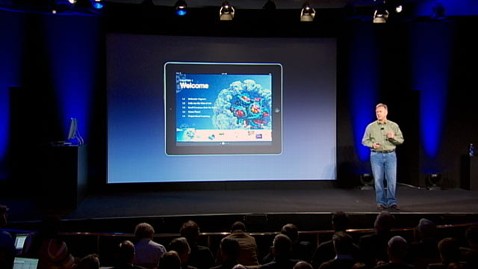
Apple's event announcing iBooks 2 and iBooks Author software at New York's Guggenheim Museum to put digital textbooks on iPads. ABC News image.
Apple, which changed music with its iPod and mobile communications with the iPhone, said today it was offering software that would reinvent the school textbook. It was a project inspired by Apple’s late co-founder and CEO, Steve Jobs.
“There’s a lot that’s talked about that may be wrong with education. One thing we hear louder than all else and where we can help is in student engagement,” said Phil Schiller, Apple’s marketing chief, at an announcement at New York’s Guggenheim Museum. “That’s why we get excited when students get their hands on an iPad.”
Schiller and his Apple colleagues showed off two new applications to take the information in textbooks and put it, in interactive form, on iPads and computers. One is called iBooks 2, a free download for iPads, available from Apple’s app store starting today. The other, iBooks Author, is a tool he said authors and publishers — as well as students and others with an interest in education — can use on a computer to create interactive iPad lessons.
“The textbook is not always the ideal learning tool,” said Schiller. “Yet their content is amazing.”
He showed how different lessons — in biology, math, literature and other areas — could play on an iPad. The new interactive books would cost $14.99, far less than most of today’s paper textbooks. They could be updated continually, said Apple. And it will not take a programming wizard to create one.
Students will be able to “mark up” their iPad books electronically, creating the digital equivalent of note cards as they go through lessons, said Apple. And they will be able to keep the iBooks, since they are digital files, after the courses are over.
Schiller said Apple was forming partnerships with three of the biggest publishers of school texts: Pearson, McGraw-Hill and Houghton Mifflin Harcourt, which are responsible for 90 percent of the textbooks used in the U.S. today. DK Publishing, which publishes vividly-colored books for younger kids, is joining in as well. Apple said a first offering would be an iPad-only book, “Life On Earth,” by E.O. Wilson, the famed biologist and professor emeritus at Harvard.
“With the iPad, we’re making textbooks so much more engaging,” said Roger Rosner, the Apple executive who has led the project.
Additionally, Apple said it was expanding iTunes U, a project it has run for colleges several years, to include elementary and high schools. Professors use iTunes U to put their lectures online.
There are major questions still to be worked out, the largest being whether schools will generally be receptive to the Apple initiative. There have been online textbooks for years, but they have not often been interactive. And the retail price for the iPad 2 starts at $499, so some educators asked if disadvantaged students would get a chance to use the new technology.
Gene Munster, a senior technology analyst for Piper Jaffray, said his firm surveyed school officials and found the major barrier to new technology was not the cost of new hardware such as iPads. Instead, he said in a phone interview with ABC News, it was control over where students went online when using school computers. At a school, an I.T. department can put up a firewall to prevent students from going to websites unrelated to learning. If students are taking school iPads home instead of books, the schools worried that they may wander around online.
Also, textbooks today go through detailed certification processes, something that is intended to ensure that they are accurate, but which also drives up their cost. Apple’s initiative would broaden the number of people who can create online lessons, and some school systems may be wary.
“We hope that educators are going to look back on today’s announcement and see the profound impact on education,” said Schiller.